
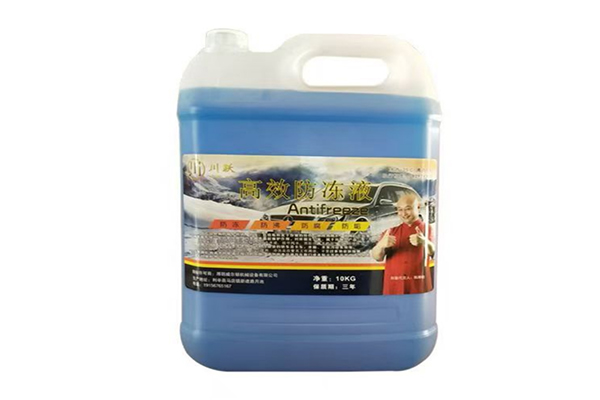
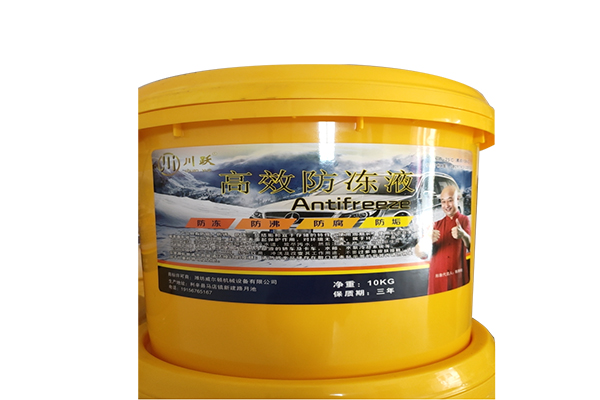


Can high-efficiency antifreeze truly be "multi-functional"—combining antifreeze, anti-boiling, anti-corrosion, and anti-scaling?
Release Time : 2025-12-08
In automotive and industrial equipment cooling systems, antifreeze has long transcended its literal meaning—it's not only a "guardian" against freezing in winter, but also an "all-around protector" ensuring efficient, stable, and long-lasting engine operation year-round. Modern high efficiency antifreeze, through scientific formulation and advanced additive technology, truly achieves "multi-functionality": integrating five core functions: antifreeze, anti-boiling, efficient cooling, anti-scaling, and anti-rust. This isn't marketing hype, but a systematic engineering achievement based on the principles of materials chemistry and thermodynamics.
1. Ultimate Antifreeze: A Safety Barrier at -40℃
The fundamental function of high-efficiency antifreeze is to lower the freezing point of the coolant. Traditional water-based coolants freeze at 0℃, and their volume expansion can cause the water tank, cylinder block, and even the engine cylinder head to crack. High-quality high-efficiency antifreeze uses high-purity ethylene glycol or propylene glycol as a base fluid, combined with freezing point regulators, to stably lower the freezing point to -40℃ or even lower. This means that even when parked overnight in extremely cold winter regions, the cooling system remains liquid, effectively preventing catastrophic mechanical damage caused by freezing and providing all-weather safety for vehicles and equipment.
2. High Boiling Point Anti-boiling: Improved Stability Under High-Temperature Conditions
When an engine operates under high load, the coolant temperature can easily exceed 100°C. Ordinary water boils violently at this temperature, creating steam barriers that lead to localized overheating or even boiling over. High-efficiency antifreeze significantly expands the safe operating temperature range of the cooling system by raising the solution's boiling point to above 110°C. More importantly, its optimized heat transfer performance increases heat dissipation by approximately 30%, more quickly removing heat from high-temperature components such as the combustion chamber and turbocharger, preventing thermal decay, and ensuring stable power output, especially suitable for high-altitude, summer, or high-performance vehicles.
3. Scale Prevention at the Source: Soft Water Base Eliminates Deposits
Scale is a hidden killer that reduces the efficiency of the cooling system. Ordinary tap water contains calcium and magnesium ions, which easily form carbonate precipitates during high-temperature circulation. These precipitates adhere to the inner walls of the water channels, hindering heat exchange and even clogging small pipes. High Efficiency Antifreeze strictly uses deionized soft water or distilled water as the dilution base, eliminating the introduction of calcium and magnesium ions at the source. Simultaneously, chelating agents and dispersants are added to the formula, ensuring that even trace impurities entering the system are encapsulated and suspended, then discharged with the circulation, ensuring long-term cleanliness and unobstructed flow of cooling channels and maintaining optimal heat dissipation efficiency.
4. Multiple Rust Prevention: An Invisible Protective Film on Metal Surfaces
Cooling systems contain various metals such as cast iron, steel, aluminum, copper, and solder, which are highly susceptible to electrochemical corrosion in contact with each other in the electrolyte. High Efficiency Antifreeze achieves comprehensive protection through a composite corrosion inhibition system: on the one hand, organic acids or inorganic salts are added to form a dense and stable passivation film on the metal surface; on the other hand, the pH value is adjusted to a slightly alkaline state to inhibit acidic corrosion. This dual mechanism of "film formation + environmental regulation" effectively prevents problems such as water pump impeller corrosion, cylinder block pitting, and radiator perforation, significantly extending the lifespan of core components.
5. The Synergistic Logic of "One Agent, Multiple Uses"
The five functions mentioned above are not isolated but rather form a mutually supportive organic whole. For example, scale prevention ensures heat transfer efficiency, indirectly improving anti-boiling capability; rust prevention protects the water pump's sealing, ensuring continuous coolant circulation; the high-boiling-point formula reduces evaporation loss and lowers the risk of concentrate corrosion to metals. It is this system-level synergistic design that makes High Efficiency Antifreeze a truly "all-purpose coolant."
High Efficiency Antifreeze is no longer just a seasonal product but an indispensable "blood" for modern power systems. It uses -40℃ antifreeze as a shield, a 110℃ high boiling point as a spear, soft water scale prevention as a base, and composite rust prevention as armor, comprehensively protecting engine health. The so-called "one agent, multiple uses" is actually a precise technological response to complex operating conditions. Choosing a truly efficient antifreeze is not only about saving money and worry, but also a long-term investment in the value and safety of your equipment.
1. Ultimate Antifreeze: A Safety Barrier at -40℃
The fundamental function of high-efficiency antifreeze is to lower the freezing point of the coolant. Traditional water-based coolants freeze at 0℃, and their volume expansion can cause the water tank, cylinder block, and even the engine cylinder head to crack. High-quality high-efficiency antifreeze uses high-purity ethylene glycol or propylene glycol as a base fluid, combined with freezing point regulators, to stably lower the freezing point to -40℃ or even lower. This means that even when parked overnight in extremely cold winter regions, the cooling system remains liquid, effectively preventing catastrophic mechanical damage caused by freezing and providing all-weather safety for vehicles and equipment.
2. High Boiling Point Anti-boiling: Improved Stability Under High-Temperature Conditions
When an engine operates under high load, the coolant temperature can easily exceed 100°C. Ordinary water boils violently at this temperature, creating steam barriers that lead to localized overheating or even boiling over. High-efficiency antifreeze significantly expands the safe operating temperature range of the cooling system by raising the solution's boiling point to above 110°C. More importantly, its optimized heat transfer performance increases heat dissipation by approximately 30%, more quickly removing heat from high-temperature components such as the combustion chamber and turbocharger, preventing thermal decay, and ensuring stable power output, especially suitable for high-altitude, summer, or high-performance vehicles.
3. Scale Prevention at the Source: Soft Water Base Eliminates Deposits
Scale is a hidden killer that reduces the efficiency of the cooling system. Ordinary tap water contains calcium and magnesium ions, which easily form carbonate precipitates during high-temperature circulation. These precipitates adhere to the inner walls of the water channels, hindering heat exchange and even clogging small pipes. High Efficiency Antifreeze strictly uses deionized soft water or distilled water as the dilution base, eliminating the introduction of calcium and magnesium ions at the source. Simultaneously, chelating agents and dispersants are added to the formula, ensuring that even trace impurities entering the system are encapsulated and suspended, then discharged with the circulation, ensuring long-term cleanliness and unobstructed flow of cooling channels and maintaining optimal heat dissipation efficiency.
4. Multiple Rust Prevention: An Invisible Protective Film on Metal Surfaces
Cooling systems contain various metals such as cast iron, steel, aluminum, copper, and solder, which are highly susceptible to electrochemical corrosion in contact with each other in the electrolyte. High Efficiency Antifreeze achieves comprehensive protection through a composite corrosion inhibition system: on the one hand, organic acids or inorganic salts are added to form a dense and stable passivation film on the metal surface; on the other hand, the pH value is adjusted to a slightly alkaline state to inhibit acidic corrosion. This dual mechanism of "film formation + environmental regulation" effectively prevents problems such as water pump impeller corrosion, cylinder block pitting, and radiator perforation, significantly extending the lifespan of core components.
5. The Synergistic Logic of "One Agent, Multiple Uses"
The five functions mentioned above are not isolated but rather form a mutually supportive organic whole. For example, scale prevention ensures heat transfer efficiency, indirectly improving anti-boiling capability; rust prevention protects the water pump's sealing, ensuring continuous coolant circulation; the high-boiling-point formula reduces evaporation loss and lowers the risk of concentrate corrosion to metals. It is this system-level synergistic design that makes High Efficiency Antifreeze a truly "all-purpose coolant."
High Efficiency Antifreeze is no longer just a seasonal product but an indispensable "blood" for modern power systems. It uses -40℃ antifreeze as a shield, a 110℃ high boiling point as a spear, soft water scale prevention as a base, and composite rust prevention as armor, comprehensively protecting engine health. The so-called "one agent, multiple uses" is actually a precise technological response to complex operating conditions. Choosing a truly efficient antifreeze is not only about saving money and worry, but also a long-term investment in the value and safety of your equipment.